
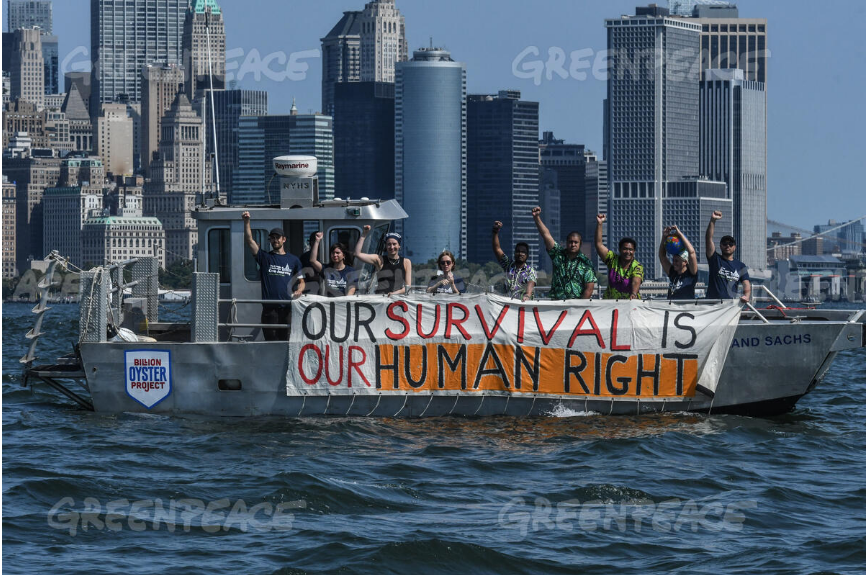
The International Court of Justice, on 23 July, released its advisory option on Obligations of States in Respect of Climate Change
The General Assembly had two questions for the ICJ:
(a) What are the obligations of States under international law to ensure the protection of the climate system and other parts of the environment from anthropogenic emissions of greenhouse gases for States and for present and future generations?
(b) What are the legal consequences under these obligations for States where they, by their acts and omissions, have caused significant harm to the climate system and other parts of the environment, with respect to: (i) States, including, in particular, small island developing States, which due to their geographical circumstances and level of development, are injured or specially affected by or are particularly vulnerable to the adverse effects of climate change? (ii) Peoples and individuals of the present and future generations affected by the adverse effects of climate change?
The ICJ ruling includes the following:
“A complete solution to this daunting, and self-inflicted, problem requires the contribution of all fields of human knowledge, whether law, science, economics or any other. Above all, a lasting and satisfactory solution requires human will and wisdom — at the individual, social and political levels — to change our habits, comforts and current way of life in order to secure a future for ourselves and those who are yet to come.
“The Court, Unanimously, Is of the opinion that the climate change treaties set forth binding obligations for States parties to ensure the protection of the climate system and other parts of the environment from anthropogenic greenhouse gas emissions.
“The Court, Unanimously, Is of the opinion that customary international law sets forth obligations for States to ensure the protection of the climate system and other parts of the environment from anthropogenic greenhouse gas emissions.
“The Court, Unanimously, Is of the opinion that a breach by a State of any obligations identified in response to question (a) constitutes an internationally wrongful act entailing the responsibility of that State.”
Image: Stephanie Keith / Greenpeace