
This financial year, the Manurewa Local Board is investing $1.1 million in a range of environmental and sustainability initiatives.
Pest Free South Auckland ($155,000)
This enables the Beautification Trust to bolster efforts with tools, devices and staffing to coordinate this programme. With 282 traps, 72 bait stations and 161 monitoring stations, locals were able to trap 67 predators at the end of 2025 in their backyards and nearby reserves. Recently, the programme held Ask an Expert: Pest Plant Edition at the Auckland Botanic Gardens, working bees, workshops, school education sessions – with evening Bat Walks planned for upcoming months. The annual Moth Plant Competition is a popular initiative, bringing local schools into the fight against one of the region’s most persistent pest plants.
Minimising Manurewa’s waste ($240,000)
This programme aims to increase efforts to reduce household waste, curb illegal dumping and boost neighbourhood pride. Since July 2025, the Beautification Trust has collected nearly 7,000kg of waste, diverting more than 1,600kg from landfill. A further 100+ e-waste items were recycled through the community recycling centre.
New initiatives include:
- A free e‑waste recycling trial at the Manurewa Community Recycling Centre
- A new illegal dumping collection pilot twice a week across key hotspots
- Two hazardous waste collection events
Manurewa’s young environment champions making a difference ($35,000)
The sustainability programme Working with Wai has been rolled out across local schools, with litter traps installed on school grounds, helping students see firsthand how rubbish moves through stormwater drains, ultimately affecting the Manukau Harbour. Classroom sessions and hands-on activities aim to deepen their understanding of how everyday choices impact local ecosystems.
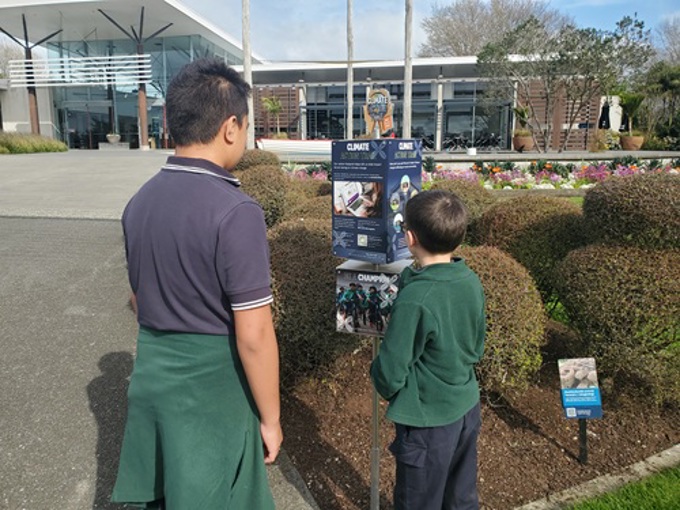
Students are learning about creating a spongier city – an urban area designed with natural features that soak up rainwater, reduce flooding and cool surrounding neighbourhoods. Through visits to the Auckland Botanic Gardens’ Spongy City and soil programmes, students will learn practical ways technology and ecology can work together to build climate resilience. Four schools receive transport to attend programme sessions, and an educator to follow up and help develop local action plans, supported with materials and equipment. Each school then brings its ideas to life in their own community.
Image (Botanic Gardens): Auckland Council